Releasing Guilt and Grief

“The Art of the Heart”
The secret chamber within …
Releasing Grief and guilt and moving into joy and bliss.
The Heart, the Lungs and the Art of Letting Go
We often think of emotions as something we experience only in the mind. We say that we are thinking too much, overthinking, or that we simply need to “get over” something.
Yet anyone who has experienced deep grief, heartbreak or guilt knows that emotions can also be felt in the body.
We may notice a tight chest, a sigh that seems to come from somewhere deep within, tears that will not come—or tears that will not stop. Guilt may be accompanied by heaviness, tension, unease or difficulty relaxing. These are bodily experiences that can accompany emotional distress, although they are not unique to any one emotion and can have many possible causes.
The relationship between body and emotion is complex.
Stress and strong feelings can influence breathing, muscle tension, sleep and other bodily processes; in turn, bodily sensations can shape how we experience emotion.
Alongside this physiological understanding, the heart and lungs have long carried symbolic meanings. In some traditional healing systems, the lungs are associated with grief and letting go, while the heart is associated with love, connection, joy and emotional pain.

These are different ways of understanding the same human experience.
Physiology describes processes in the body. Symbolism gives those processes emotional and poetic meaning. Traditional healing beliefs offer cultural frameworks that may help people reflect on suffering and healing, but they should not be confused with established medical explanations.
So, whether we speak through the language of physiology, symbolism or tradition, there is something deeply recognisable in the experience: when the heart is hurting, the body may feel it too.
Where Does Grief Go?
Grief is often described as something we must “get through”. But grief does not always move in a straight line. It is stored in the lungs if suppressed “unshed tears” may appear as pneumonia, pleurisy, asthma, or a breast/chest /rib issue.
Grief can return unexpectedly.
A song.
A familiar scent.
A photograph.
A particular place.
And suddenly, the loss feels present again.
We grieve not only for people who have died. We may grieve for a relationship, a lost dream, our health, a home, a career, a childhood, or a future we imagined but never received.

Grief says:
> **Something precious has changed. I have love but nowhere to put it.**
And because grief can be so deeply connected to love, we may unconsciously hold onto it.
Sometimes we believe that if we stop grieving, we are somehow letting go of the person.
But releasing grief does not mean releasing love.
We can keep the love.
We can keep the memories.
We can honour what was.
And still allow ourselves to breathe again.
The Lungs and the Breath
In many traditional healing systems, the lungs are symbolically connected with grief and the process of letting go. This is a traditional or metaphorical association, not a claim that grief resides physically in the lungs or that the lungs alone determine our emotional state.
And there is something profoundly meaningful about the image.
The lungs continually show us the rhythm of life.
We breathe in.
And we breathe out.
We receive.
And we release.
We cannot continue inhaling forever. Breathing requires both taking in and letting go.
When we are distressed, frightened or grieving, our breathing may change. We might hold our breath, sigh more often or breathe more shallowly. These changes can occur as part of the body’s response to stress, though breathing patterns vary from person to person and can also be affected by many physical conditions.
A slow, comfortable breath may help some people feel more grounded or create a moment of pause during emotional pain. It does not erase grief, and it is not a cure for distress.
But it can create space around what we are feeling.
And sometimes, space is where healing begins.

Heart & throat chakra balance along with the Lung Meridian balancing creams are so powerful :
The Heart and Emotional Connection
The heart is one of the extraordinary organs of the body.
Physically, it works continuously throughout our lives, circulating blood through an intricate rhythm of contraction and relaxation.
But throughout human history, the heart has also been a symbol of love.
We speak of:
A broken heart.
A heavy heart.
A warm heart.
An open heart.
A heart full of joy.
These expressions belong to the symbolic language of human experience. They do not mean that every emotional state is located in the heart itself. Strong emotions can be accompanied by sensations in the chest, but chest discomfort can also have many physical causes and should not automatically be interpreted as emotional.
The heart reminds us of rhythm.
It contracts.
It releases.
It fills.
It empties.
It moves in a remarkable three-dimensional pattern.
And perhaps this offers us a beautiful metaphor for emotional life.

We cannot remain permanently open.
There are times when life causes us to contract.
We protect ourselves.
We withdraw.
We close down.
But contraction is not necessarily the end of expansion.
The heart contracts—and then releases again.
The Weight of Guilt
If grief is connected with loss, guilt is often connected with the past.
Guilt asks:
What if I had done something differently?
What if I had been there?
What if I had known?
What if it was my fault?
Sometimes guilt serves a purpose. If we have genuinely harmed another person, guilt can help us recognise what needs to change.
But guilt was never designed to become a life sentence.
Healthy guilt can lead us towards:
Recognition.
Responsibility.
Repair.
Learning.
Release.
The difficulty comes when we continue punishing ourselves for something that cannot be changed.
Or when we take responsibility for things that were never ours to control.
Many people carry guilt for years because they believe that suffering is somehow a form of repayment.
But suffering does not change the past.
Learning can.
Love can.
Forgiveness can.
When We Hold On
Sometimes we hold emotions because they have become familiar.
Even pain can feel safer than the unknown.
We may unconsciously believe:
> *If I am still suffering, I am proving how deeply I loved.*
Or:
> *If I forgive myself, I am saying that what happened was acceptable.*
Neither is necessarily true.
Forgiveness is not approval.
It is not forgetting.
It is not pretending.
Forgiveness is the moment we decide:
> **I will no longer allow the past to continue determining the quality of my life.**
We can acknowledge what happened without living there forever.
The Body’s Invitation to Release
Perhaps one of the most important questions we can ask ourselves is:
What am I still carrying?
Is it grief?
Is it guilt?
Is it anger?
Is it someone else’s pain?
Is it a story about ourselves that has outlived its usefulness?
The body may draw our attention to what needs care through tension, tears, fatigue or difficulty relaxing. These sensations can accompany emotional strain, but they are not definitive proof of its cause. Persistent, severe or worrying physical symptoms deserve appropriate medical attention.
The answer is not always to push harder.
Sometimes the answer is to pause.
To place a hand on the heart.
To take a slow, comfortable breath.
To listen.
And to ask:
> **What do I need to release?**

From Holding On to Letting Go
Letting go does not mean that something was unimportant.
In fact, we often find it difficult to release precisely because something meant so much.
But we can learn to separate love from suffering.
We can keep one without continually carrying the other.
We can say:
> **I honour what happened.**
> **I honour what I felt.**
> **I honour the love.**
> **And I release the suffering I no longer need to carry.**
The lungs continue to breathe.
The heart continues to beat.
Life continues to move.
And perhaps healing is simply learning to move with it once again.
Stepping Into Joy
Joy does not betray grief.
Happiness does not betray the person we have lost.
Laughter does not mean that we have forgotten.
There comes a time when we must give ourselves permission to live again.
To enjoy the sunlight.
To laugh without guilt.
To love without fear.
To breathe deeply, if that feels comfortable.
To receive the beauty that is still here.
Perhaps joy is not the absence of sorrow.
Perhaps joy is the ability to recognise that sorrow and beauty can exist together.
The heart can remember and still open.
The lungs can release and receive another breath.
And we can honour the past without sacrificing the future.
The great invitation of healing is not to become someone who has never known pain.
It is to become someone who is no longer afraid to feel joy.
Keep the love. You deserve it. You are doing the best you can.
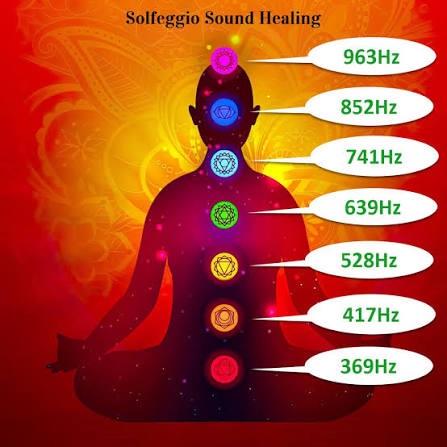
Balance your heart, throat and Alta major chakras to step further into bliss. Also you can explore the heart resonance frequencies of 432hz and 639hz